Saturday, October 22, 2016

SELF DETERMINATION

When considering constitutionally protected indigenous governments from around the world, Matike Mai o Aotearoa (the Independent Working Group on Constitutional Transformation) received feedback on the Sami Parliament in Norway, the Bolivian Constitution, and several First Nations governments in North America. 

But one example of indigenous governments that the Working Group did not cover are the indigenous devolved governments in countries like the United States, Canada, Australia, Mexico, France, Spain and the United Kingdom.  In the UK these include the Northern Ireland Assembly, the Scottish Parliament, and the National Assembly for Wales.

The reason these governments were not covered by the Working Group is that none of them have any constitutional protection, even the Scottish Parliament which enjoys a quite high degree of independence. 

Instead each of them were created and granted limited statutory powers by the Government of the United Kingdom; and they can be dissolved and have their powers amended or repealed altogether by that same government. 

These do not represent the kind of constitutionally protected right to self determination that we are working towards as part of constitutional transformation.  However, in spite of their limitations and shortcomings, they all were created in response to the desire of their indigenous people for self government, a desire shared by the indigenous peoples of New Zealand.

[1]In reality all governments, including indigenous ones, are imperfect.  But as acknowledged by the late Lakota Sioux jurist Vine DeLoria, who was often a critic of the policies of some Tribal Governments, the values and rights they represent are important because –

“Whatever the shortcomings of these government structures they are for many…an honouring of ancient treaties and an even more ancient constitutional tradition and authority…and because of the genius of our people, and the genius of all Indigenous Peoples I know, they are a vehicle through which we can exercise our sovereignty and find some way to maintain our law and our rights…better to have that than have [someone else] exercising it for us”. 

After the discussions on Indigenous Governments from around the world, the Working Group concluded that there is value in studying the principles and practices that other Indigenous Peoples have used to give constitutional form to their equivalent of mana and rangatiratanga. Although often limited in their jurisdiction and funding they provide working examples of how a different form of governance can function and work alongside other governing systems.

More importantly they are expressions of the right to govern. They give effect to the same constitutional ideals for self determination our people acted upon for centuries and which Te Tiriti guaranteed we should continue to do. 

Next week we will begin consideration of the kinds of values upon which we may transform our constitutional arrangements in New Zealand.


[1] Twenty-fourth edited extract from p. 68 of He Whakaaro Here Whakaumu Mō Aotearoa – The Report of Matike Mai o Aotearoa

Friday, October 14, 2016

NATIVE AMERICAN GOVERNMENTS

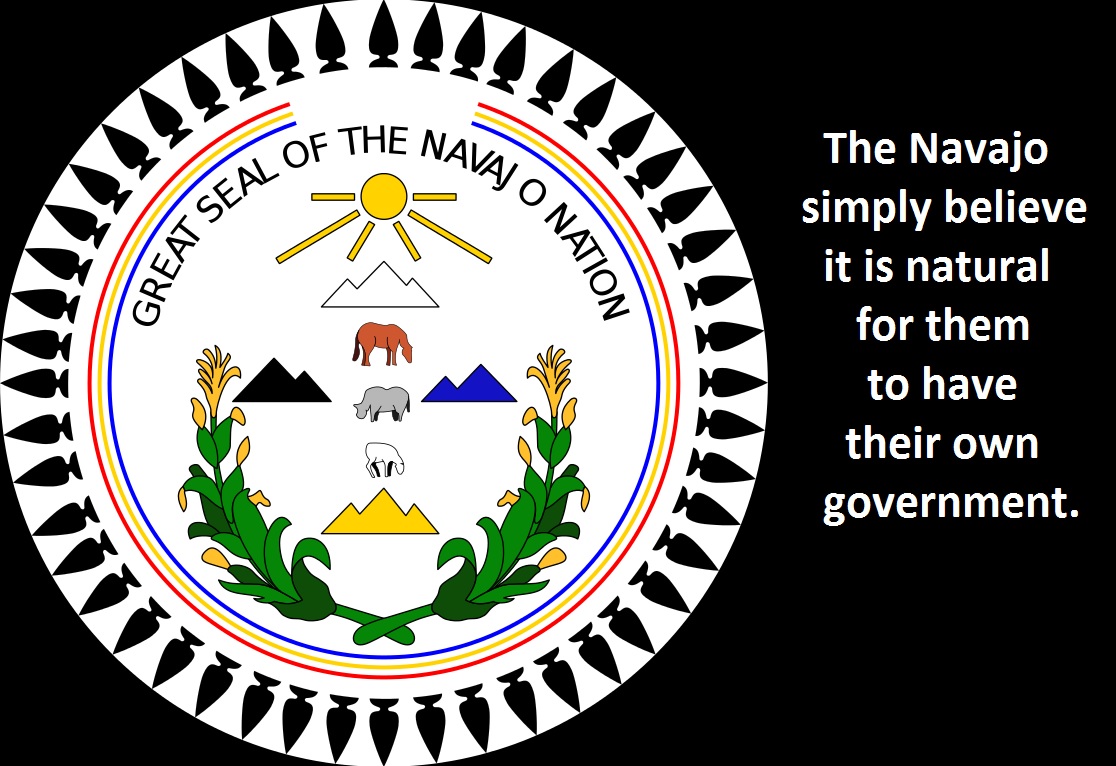
[1]The Tribal Governments operating on many Native American reservations are perhaps the most commonly known examples of how Indigenous Peoples exercise governance.

Some participants at the hui of Matike Mai o Aotearoa (the Independent Iwi Working Group) had visited or worked on reservations and shared their experiences.  Some of the members of the Working Group were also familiar with them.

In practice they are quite confined by Federal law and often merely mimic Federal or State structures. However as with the Sami Parliament the fact of having a government was simply accepted as part of who they are. It was an institutional expression of their rangatiratanga and thus their constitutional right to govern themselves. 

A participant who had worked on the Navajo Reservation in Arizona noted –
 
“What always impressed me was not that they had their own government or their own courts or their own Police Force and schools so much as the way that everyone simply believed that it was all completely natural…no-one argued about whether they had a right to it or whether it was separatist, they just did it…they knew it didn’t always work perfectly but they knew it was their absolute right to have it and that they would eventually fix its flaws because it was theirs. The idea that they shouldn’t have it or might have ever given it away was simply foreign to them…it was the practical expression of their sovereignty and everyone believed in it from the elders to the mokopuna.

Others commented on the importance of having some similar institutional recognition of rangatiratanga

“If self determination means anything then it has to mean the same thing for everyone…Apache or Hawaiian or Ngāti Awa or Ngāti Te Ata or whoever…that’s why what the Native Americans have managed to do is so important and why we need something like it here…it gives an actual real place to say this is our mana and this is what it means in practice”.

Native Americans I know admit there are real issues in some Tribal Governments…like there are with any government, but it’s theirs and they have the chance to decide what its priorities and values are in a much more effective and real way than we do…that’s a real important difference and I can’t help thinking they are much closer to their rangatiratanga than we are”. 

“At least on the reservations people can point to their government or their courts and say ‘That’s our mana in action’ and that’s a real boost for them…here all we’ve got is the words or some Crown entity like a Trust Board or a PSGE and that’s not the same because they are Crown entities not ours…they might control some pūtea but can you imagine the Crown allowing a Trust Board to set up its own court or charging rates?”


Sunday, October 09, 2016

THE BOLIVIAN CONSTITUTION

[1] As part of their constitutional transformation mahi, members of Matike Mai o Aotearoa (the Independent Iwi Working Group) researched other models of indigenous governance. 

These provided helpful starting points about how constitutionalism is understood by other tangata whenua and how it can be given effect. Last week we considered the Sami Parliament, and this week we consider the Constitution of the State of Bolivia.

Some features of the Bolivian constitution were known to a number of participants in the Working Group process. Some had actually spent time in Bolivia and many others also knew something of the process involved in its drafting. Many also knew that the current President of Bolivia, Evo Morales, is indigenous. 

However what attracted interest was not the detailed provisions of the constitution but the indigenous values which underpin it. Indeed many participants saw parallels with Māori perspectives on a number of issues, especially the importance of the environment and the relationships people have with it and with each other. 

The Preamble for example begins with the value of “belonging” and the interrelationships between the land and the people –


“In ancient times mountains arose, rivers formed and lakes were formed…We populated this earth with different faces and since that time have understood the plurality that exists in all things”.

It also recognises the primacy of Pachamama or the Mother Earth

           "We found Bolivia anew, fulfilling the mandate of the people 
             and the strength of our Pachamama…”

The recognition of the relationships with the earth is in effect the Prime Law of the Constitution from which everything else flows, including certain tikanga or basic values

“Everyone has the right to a healthy, protected and balanced environment…and to suma qamara (live well) and nandereko (live harmoniously)”.

A number of written submissions referred directly to the Bolivian constitution 

"There seem to be numerous parallels with our world view, especially the idea of kaitiakitanga and the responsibility everyone should have towards Papatūānuku … but enshrining them in a constitution gives them a meaning and force that is currently missing here. They give a model for what is possible”.

“When I was in Bolivia last year I was struck by the similarities as well as the differences but I was impressed most of all by the fact that they could draft an indigenous constitution that allows for modern governance while drawing on such a rich tikanga … It displays a real confidence in the people’s ability to meet new challenges both domestically and internationally and also shows how colonisers and Indigenous Peoples can work together within a shared constitutional framework. It also shows what could happen here if the guarantees in Te Tiriti are ever met”.


[1] Twenty-second edited extract from pp. 65 – 67 of He Whakaaro Here Whakaumu Mō Aotearoa – The Report of Matike Mai o Aotearoa

Sunday, October 02, 2016

THE SAMI PARLIAMENT

[1] As part of their constitutional transformation mahi, members of Matike Mai o Aotearoa (the Independent Iwi Working Group) researched other models of indigenous governance. Additionally a number of participants at the hui held between 2010 – 2015 tabled information about indigenous government institutions they had visited or were familiar with. 

Everyone recognised the different circumstances of those institutions, as well as their limitations. However they did provide helpful starting points about how constitutionalism is understood by other tangata whenua and how it can be given effect. The hui found three examples of particular interest, the first being the Sami Parliament.

The Sami Parliament or Samediggi was established in Norway in 1989. It has an elected plenary body of thirty nine representatives and deals with political initiatives relevant to the Sami people. 

Although its current practical powers are modest it recognises the idea of different “spheres of influence” that the Waitangi Tribunal referred to in the Paparahi o te Raki claim.  Its importance is the practical recognition it gives to the Sami and their rights.  A former member of the Sami Council, the late Leif Dunfjeld, commented – 

“What has always been vital to us is being able to give some institutional and constitutional form to our right of self determination. Moving it from a right just talked about or an ideal just argued over with the Norwegian government to what is now a functioning practice has been a reclaiming of who we are … We are in a different constitutional relationship with the State now which is based on our political authority and we haven’t had a mechanism to exercise that for centuries”.   

Some contributors at the hui had met or hosted Sami delegations and were aware of the restrictions under which the Samediggi currently operates. However they also regarded the constitutional and institutional recognition of it by the Norwegian government as an important precedent for Māori and other Indigenous Peoples –

“The situations are really different but having some place where their rangatiratanga is exercised is much better than the kind of ad hoc process we have here where the Crown doesn’t even acknowledge a constitutional role for us unless it’s on their terms and in their system. At least they have a Parliament where they can come together as a people in a constitutional framework rather than just the hui we have to have whenever we need to react to something the Crown is doing”.
 
“When they were here they talked about the hara they used to have deciding mandates and … and all of the other issues that most of our Iwi Authorities are plagued with. But now that they are in a formal constitutional relationship with the Norwegian government and have their own institutions and governing body, a lot of those problems seem to have disappeared.”


Sunday, September 25, 2016

THE UN DECLARATION AS A BENCHMARK

[1] In any discussion of constitutional transformation, Matike Mai o Aotearoa (the Independent Iwi Working Group) accepts the importance of the United Nations Declaration on the Rights of Indigenous Peoples.  Like other documents such as the Mataatua Declaration it provides an international benchmark against which the exercise of rangatiratanga may be defined and measured.

The rights it espouses, and particularly the right of self determination, are living rights that inhere in humans as peoples, not as subjects of some political order.  The UN Declaration is therefore an absolutely appropriate baseline to be considered in the development of a new and inclusive constitution.

It is an international mirror of rights and authority that Māori have always had, and is thus an adjunct to Te Tiriti and what it should mean in terms of self determination as both a human right and a capacity to once again make our own decisions.

Most of all the Working Group acknowledged the mana that Māori accord the Declaration –

“We are now trying to use the UN Declaration whenever we can.  I remember when James Anaya (the former UN Special Rapporteur on the Rights of Indigenous Peoples) was here he said something like, ‘It’s your rights. It’s your Declaration.  Make it work for you.’  And it does recognise all those things we talk about in the treaty.”

“We wanted it (the Declaration) in our Deed of Settlement, but the Crown refused.  But we still see it as a kind of supplement to Te Tiriti and He Whakaputanga … It’s an international statement of the things our people have been saying since 1835, and can be another benchmark for what we are talking about now.”

Although the Declaration is concerned with existing relationships with States that are quite different to those contemplated in this constitutional transformation process, it is nevertheless relevant because it is the sum of what literally thousands of Indigenous Peoples have regarded as a minimum international set of human rights.

Symbolically it is also important because the inclusion of the right to self determination was only achieved after years of struggle by Indigenous Peoples against governments (including the government of New Zealand) that sought to deny it.

The success of that struggle can give hope and reassure people that the difficulties involved in constitutional transformation can be overcome.

Next week we will begin considering indigenous constitutions in practice. 

Monday, September 19, 2016

UN DECLARATION - THE ARTICLES

[1] The United Nations Declaration on the Rights of Indigenous Peoples comprises 46 articles.  In the course of the hui held by Matike Mai o Aotearoa between 2010 to 2015 a number of those articles were referred to, including the Preambular Statement –

“Recognising the urgent need to respect and promote the … rights of Indigenous Peoples which derive from their political, economic and social structures and from their cultures spiritual traditions, histories and philosophies, especially their rights to their lands, territories and resources …”

The particular articles people felt were most relevant were

“Article 3 – Indigenous Peoples have the right to self-determination.  By virtue of that right they freely determine their political status and freely pursue their economic, social and cultural development.

Article 36 – Indigenous Peoples have the right to recognition, observance and enforcement of treaties, agreements and other constructive arrangements concluded with the States of their successors and to have States honour and respect such treaties, agreements or other constructive arrangements.”

For many participants the Article 3 definitions of self-determination were also apt descriptions of rangatiratanga.  In their view it therefore had real relevance in the development of a tikanga and treaty-based constitution –

“Really rangatiratanga is just us determining our own destiny which Article 3 talks about.  I’m not fussed whether there are all sorts of legal arguments about whether the Crown will let the Declaration be used … or even when self-determination really applies because I just see it as another statement about our rights, and in a way that’s what all the kōrero is about.”

“When our tūpuna went overseas in the early 19th century and came back with all sorts of new ideas about farming and roading and so on, they also came back with new political ideas about how Hapū might organise themselves to meet the new times they were in … we’ve never been afraid of claiming international precedents and that’s all the Declaration is – another way of helping see our rights and our tino rangatiratanga at an international level as well as here at home.”

“The Declaration probably isn’t perfect, but like Te Tiriti it’s there for us to use … and if we can use it like Te Tiriti by holding on to what it says about our rangatiratanga or self-determination and then trying to give voice to it, that will be of real value to this mahi.”

Article 36 was considered particularly important because of the Crown’s ongoing use of Te Tiriti as a treaty of cession

“That Article 36 is really interesting when it talks about enforcement, because the Crown thinks it’s enforcing Te Tiriti, but it only does that because it says we let them take our mana.  That’s not enforcing Te Tiriti, it’s enforcing what the Crown wanted it to be.”

More on this next week.

Sunday, September 11, 2016

INTERNATIONAL PRECEDENTS - THE UN DECLARATION

[1] The United Nations Declaration on the Rights of Indigenous Peoples was discussed at every hui held by Matike Mai o Aotearoa (the Independent Working Group on Constitutional Transformation) and was referred to in most of the written submissions received.  Although the Crown has attempted to downplay its importance (after initially declining to recognise it at all) it continues to have growing resonance.

Because a number of Māori contributed to the drafting of the Declaration, many of our people understand its relevance here as well as overseas.  It is perhaps the most well-known of all international human rights’ instruments, and those involved in its drafting were often referred to.


The respected kuia Erihapeti Murchie was one of those who was actively involved in the early drafting stages.  At a crucial point in the process in 1992 she stated –

“As Ngāi Tahu and as a Māori I see the Declaration as an international expression of the rights we have through whakapapa and the treaty.  

"As an indigenous woman I see it as the first ever international statement about the minimum human rights standards that apply to Indigenous Peoples, including indigenous women and children.  From both points of the view the Declaration will enable us to claim back the right of self-determination and give our people international reassurance that tino rangatiratanga has a political as well as a cultural meaning.”

For several years one of the rangatira who accompanied the Māori delegation to drafting sessions of the Declaration was Sir Archie Taiaroa.  He also saw the links between the Declaration and Te Tiriti as well as its particular relevance to the constitutional change hui which were being held at Hīrangi during the 1990s

“I am reminded of the times when our old people travelled to London and even to what was then called the League of Nations in Geneva to get pressure put on the Crown to honour the treaty.  

"Well we are back here now but in different circumstances, and this time we are drafting something, this Declaration, which is unique because it involves so many Indigenous Peoples.  It’s also unique because it seems to have so much in common with Te Tiriti.  

"It seems that at last the work of all those people who travelled to Europe might be bearing fruit.  If it does, then the Declaration could sit alongside the treaty and maybe the discussions at Hīrangi might lead to further kōrero in the future.”

Matike Mai similarly saw the Declaration as an international expression of what tino rangatiratanga means in political and constitution terms, and they agreed with the view of the Native American jurist John Mohawk

“The efforts by hundreds of Indigenous Peoples to draft the UN Declaration is another attempt to express in human rights law the basic tenets of being indigenous – a love for and authority with the land, a resolve to enhance and protect the right to be the people of the land, the power to have sovereignty and to be self-determining, and the ancestral obligation to find a good way of relating with others … 

"Because of our history it also means helping us  recover from centuries of dispossession by stating to the world who we are and what we are entitled to … by declaring the human rights, the humanity, that colonisation has for too long denied us.”

We will consider the UN Declaration further next week.

Monday, August 29, 2016

CONSTITUTIONAL FOUNDATIONS

[1]Whether their kōrero was with kaumātua or rangatahi, or with those living in cities or rural areas, there was always acceptance from those that Matike Mai o Aotearoa spoke to that Te Tiriti was the only possible starting point for any discussion about a new constitution.

If a constitution without tikanga was seen as not being tika, then a constitution that did not derive from Te Tiriti was similarly seen as contrary to both tikanga and any broader sense of justice.  It was in a very real sense seen as another breach of Te Tiriti.

It was equally clear in their kōrero that basing a constitution on Te Tiriti was indeed quite different from incorporating it into the existing constitutional system.  Te Tiriti’s reaffirmation of tino rangatiratanga and its non-cession of mana was constantly referred to as simple statements of fact which precluded its incorporation into any other system.

Equally importantly, Te Tiriti’s entrenchment of a place for Pākehā was also seen as a statement of cultural reality in 1840 – that as tangata whenua, Māori were obligated to allow manuhiri certain entitlements as well as the authority to govern themselves, just as that authority was acknowledged amongst Iwi and Hapū

Reaffirming the place of Pākehā and determining the tikanga which justified it was also seen as a necessary basis for any treaty-based constitutional relationship.

Throughout all of this process our people were passionate and committed to Te Tiriti.  They had a broad historical sensibility about the circumstances of its signing and its meaning for Māori as well as an awareness of a differing Crown perspective.

There was also a consensus that it involved a special set of rights and obligations which had not yet been completely honoured.

While everyone was appreciative of the treaty-based changes that had been made in recent years, they were also agreed that the treaty relationship involved more than the kind of “partnership” that has been the dominant view in the recent Crown Treaty policies and jurisprudence.

In fact it was noticeable how often people used the term “treaty relationship” rather than “treaty partnership”.  It was also noticeable how often it was remarked that the “partnership” was never equal in the way that it was implemented by the Crown.
The inevitable awareness of and debate about the Crown’s Treaty settlement policies was shaped by those experiences. 

Even when we spoke with people who were proud of their involvement in settlement negotiations, there was an often forcefully expressed sense that until the power imbalance in the treaty “partnership” is addressed, there cannot be completely full and final settlement.

In recent months this column has laid out the importance of basing any new constitution on He Whakaputanga and Te Tiriti.  Next week we will begin laying out the international precedents that are also important to our constitutional foundations.